
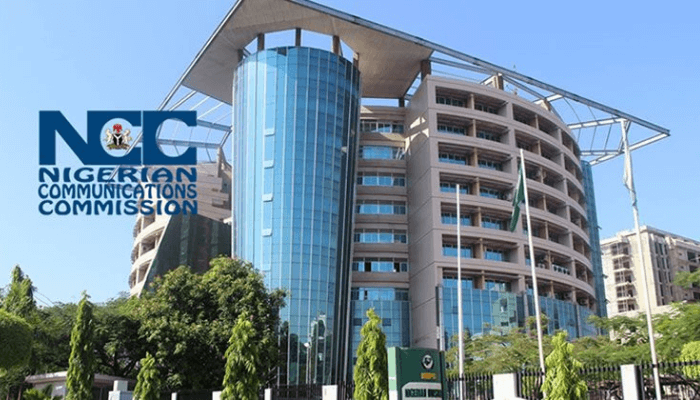
The Nigerian Communications Commission (NCC) has unveiled plans to open the lower 6 GHz and 60 GHz spectrum bands as part of a proposed Spectrum Roadmap 2026–2030, a policy move aimed at easing capacity constraints, driving broadband expansion, and supporting Nigeria’s ambition to build a $1 trillion digital economy by the end of the decade.
The proposals were presented on Monday at a stakeholders’ consultative forum, where the regulator signalled a shift toward more predictable and investment-friendly spectrum management in response to surging data demand from businesses, households, and emerging technologies.
https://googleads.g.doubleclick.net/pagead/ads?us_privacy=1—&gpp_sid=-1&client=ca-pub-4436182731786816&output=html&h=280&adk=295936384&adf=2814292009&w=817&fwrn=4&fwrnh=100&lmt=1768833358&rafmt=1&armr=3&sem=mc&pwprc=9605152401&ad_type=text_image&format=817×280&url=https%3A%2F%2Fbusinessday.ng%2Ftechnology%2Farticle%2Fncc-targets-faster-broadband-investment-uptick-with-new-spectrum-roadmap%2F&fwr=0&pra=3&rh=200&rw=816&rpe=1&resp_fmts=3&aieuf=1&aicrs=1&fa=27&uach=WyJXaW5kb3dzIiwiMTQuMC4wIiwieDg2IiwiIiwiMTQ0LjAuNzU1OS41OSIsbnVsbCwwLG51bGwsIjY0IixbWyJOb3QoQTpCcmFuZCIsIjguMC4wLjAiXSxbIkNocm9taXVtIiwiMTQ0LjAuNzU1OS41OSJdLFsiR29vZ2xlIENocm9tZSIsIjE0NC4wLjc1NTkuNTkiXV0sMF0.&abgtt=6&dt=1768838770212&bpp=5&bdt=7472&idt=5&shv=r20260115&mjsv=m202601130101&ptt=9&saldr=aa&abxe=1&cookie=ID%3Dabd771904744449f%3AT%3D1763708552%3ART%3D1768838766%3AS%3DALNI_MaHaClt8gX5NYeKIXeoAqUa-Ikjzg&gpic=UID%3D0000129077f0e001%3AT%3D1763708552%3ART%3D1768838766%3AS%3DALNI_MYVYdoZEbggfUfNFfPJU5hZJ5MLFw&eo_id_str=ID%3De03a33b6032ca36a%3AT%3D1762497538%3ART%3D1768838766%3AS%3DAA-AfjZF4YVz6piA7qRkg1LXQodj&prev_fmts=0x0%2C817x280%2C817x280%2C817x280%2C300x600%2C300x250&nras=2&correlator=7281865347954&frm=20&pv=1&u_tz=60&u_his=3&u_h=768&u_w=1366&u_ah=720&u_aw=1366&u_cd=24&u_sd=1&dmc=8&adx=111&ady=1874&biw=1351&bih=633&scr_x=0&scr_y=0&eid=95344791&oid=2&pvsid=8153003777765088&tmod=991265784&uas=1&nvt=1&ref=https%3A%2F%2Fbusinessday.ng%2F&fc=1408&brdim=0%2C0%2C0%2C0%2C1366%2C0%2C1366%2C720%2C1366%2C633&vis=1&rsz=%7C%7Cs%7C&abl=NS&fu=128&bc=31&bz=1&pgls=CAEaBTYuOC4x&num_ads=1&ifi=7&uci=a!7&btvi=5&fsb=1&dtd=83
“Spectrum may be invisible, yet it is indispensable,” said Aminu Maida, executive vice chairman and chief executive officer of the NCC. “Behind every digital transaction, every online classroom, every connected device in Nigeria, there is spectrum at work.”
Opening new spectrum bands could lower network congestion, reduce broadband costs over time, and improve quality of experience for consumers and businesses critical factors for productivity and digital competitiveness.
Maida noted that demand for spectrum is accelerating, driven by cloud services, artificial intelligence, the Internet of Things, and data-intensive enterprise applications.
According to him, the roadmap is designed to provide regulatory clarity and long-term certainty for investors while expanding access and improving service quality. “The Spectrum Roadmap 2026–2030 is about creating a transparent, predictable, and enabling regulatory environment that supports investment, encourages innovation, and expands access for all Nigerians.”
The NCC said the lower 6 GHz band will unlock the full potential of Wi-Fi 6, enabling faster speeds, lower latency, and more efficient connectivity across offices, campuses, schools, hospitals, and public spaces.
The 60 GHz license-exempt band is expected to support multi-gigabit wireless systems for data-heavy use cases such as smart manufacturing, artificial intelligence workloads, cloud computing, and smart-city deployments.
Globally, Wi-Fi carries a significant share of internet traffic, particularly indoors, where businesses increasingly rely on wireless networks for operations. By opening these bands, the NCC said it is preparing Nigeria’s infrastructure not just for mobile growth, but for enterprise and institutional data demands.
Atiku Lawal, head of the NCC’s Spectrum Administration Department, while speaking at the forum, described the roadmap as a strategic economic instrument rather than a purely technical document.
“The demand for high-speed, reliable connectivity is no longer a luxury; it has become an absolute necessity,” Lawal said. “The Spectrum Roadmap 2026–2030 is more than a technical document; it is a strategic blueprint for the nation’s digital future.”
He noted that effective spectrum reform could help bridge the digital divide by extending high-quality connectivity to underserved and rural communities, with implications for education, healthcare delivery, and small business growth.
Abraham Oshadami, executive commissioner for technical services at the NCC, said in his keynote address that Nigeria’s progress in broadband penetration and 5G deployment must now be matched with forward-looking spectrum planning to sustain growth.
“Spectrum is a scarce national asset and the backbone of Nigeria’s digital economy,” Oshadami said. “The way we plan, assign, and regulate spectrum will determine our ability to achieve broadband targets, stimulate innovation, and strengthen global competitiveness.”
Oshadami noted that rising data consumption from fixed wireless access, real-time applications, and emerging technologies is placing pressure on existing spectrum resources, making the opening of new bands unavoidable.
https://googleads.g.doubleclick.net/pagead/ads?us_privacy=1—&gpp_sid=-1&client=ca-pub-4436182731786816&output=html&h=280&adk=295936384&adf=2049269899&w=817&fwrn=4&fwrnh=100&lmt=1768833358&rafmt=1&armr=3&sem=mc&pwprc=9605152401&ad_type=text_image&format=817×280&url=https%3A%2F%2Fbusinessday.ng%2Ftechnology%2Farticle%2Fncc-targets-faster-broadband-investment-uptick-with-new-spectrum-roadmap%2F&fwr=0&pra=3&rh=200&rw=816&rpe=1&resp_fmts=3&aieuf=1&aicrs=1&fa=27&uach=WyJXaW5kb3dzIiwiMTQuMC4wIiwieDg2IiwiIiwiMTQ0LjAuNzU1OS41OSIsbnVsbCwwLG51bGwsIjY0IixbWyJOb3QoQTpCcmFuZCIsIjguMC4wLjAiXSxbIkNocm9taXVtIiwiMTQ0LjAuNzU1OS41OSJdLFsiR29vZ2xlIENocm9tZSIsIjE0NC4wLjc1NTkuNTkiXV0sMF0.&abgtt=6&dt=1768838770271&bpp=4&bdt=7531&idt=5&shv=r20260115&mjsv=m202601130101&ptt=9&saldr=aa&abxe=1&cookie=ID%3Dabd771904744449f%3AT%3D1763708552%3ART%3D1768839503%3AS%3DALNI_MaHaClt8gX5NYeKIXeoAqUa-Ikjzg&gpic=UID%3D0000129077f0e001%3AT%3D1763708552%3ART%3D1768839503%3AS%3DALNI_MYVYdoZEbggfUfNFfPJU5hZJ5MLFw&eo_id_str=ID%3De03a33b6032ca36a%3AT%3D1762497538%3ART%3D1768839503%3AS%3DAA-AfjZF4YVz6piA7qRkg1LXQodj&prev_fmts=0x0%2C817x280%2C817x280%2C817x280%2C300x600%2C300x250%2C817x280%2C728x90%2C817x280%2C817x280&nras=6&correlator=7281865347954&frm=20&pv=1&u_tz=60&u_his=3&u_h=768&u_w=1366&u_ah=720&u_aw=1366&u_cd=24&u_sd=1&dmc=8&adx=111&ady=4601&biw=1351&bih=633&scr_x=0&scr_y=2083&eid=95344791&oid=2&pvsid=8153003777765088&tmod=991265784&uas=1&nvt=1&ref=https%3A%2F%2Fbusinessday.ng%2F&fc=1408&brdim=0%2C0%2C0%2C0%2C1366%2C0%2C1366%2C720%2C1366%2C633&vis=1&rsz=%7C%7Cs%7C&abl=NS&fu=128&bc=31&bz=1&pgls=CAEaBTYuOC4x&num_ads=1&ifi=10&uci=a!a&btvi=9&fsb=1&dtd=M
The draft guidelines will define deployment scenarios, power limits, interference-mitigation mechanisms, and compliance frameworks to ensure orderly and efficient use of the newly available spectrum, he said.
The NCC said feedback from operators, technology companies, and other stakeholders will shape the final version of the roadmap and guidelines, reinforcing its consultative and evidence-based regulatory approach.
For Nigeria’s telecoms and technology ecosystem, the reforms signal a renewed regulatory push to align connectivity infrastructure with broader economic goals by positioning spectrum policy as a lever for investment, productivity, and long-term digital growth.