
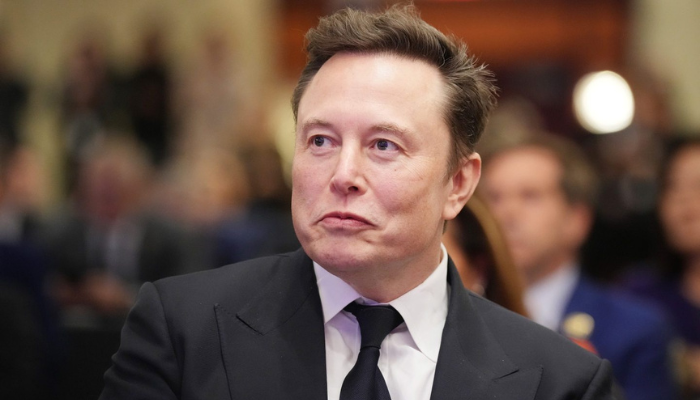
Elon Musk has set his sights squarely on OpenAI’s $500 billion valuation, seeking between $79 billion and $134 billion in damages as his high-profile lawsuit against the artificial intelligence company and its key partner, Microsoft, heads toward trial next month.
The extraordinary claim, first reported by Bloomberg, is anchored on an expert damages analysis by Paul Wazzan, a financial economist retained by Musk’s legal team.
Wazzan argues that Musk is entitled to a significant share of OpenAI’s current valuation, citing both his early financial backing and what the report describes as foundational technical and business contributions during the company’s formative years.
Musk co-founded OpenAI in 2015 and provided roughly $38 million in seed funding. According to the analysis, that early investment, combined with strategic guidance and technical input, positions Musk as an early stakeholder whose returns would have grown exponentially had OpenAI remained aligned with its original nonprofit structure.
Wazzan’s report estimates alleged wrongful gains of $65.5 billion to $109.4 billion attributed to OpenAI, alongside $13.3 billion to $25.1 billion linked to Microsoft, which now owns about 27 percent of the company.
The damages claim directly challenges OpenAI’s evolution from a nonprofit research lab into a commercially driven AI powerhouse valued at half a trillion dollars.
Musk’s lawsuit alleges that the company abandoned its founding mission of open, safety-focused AI development in favour of a closed, profit-oriented model closely tied to Microsoft’s commercial interests.
As the case moves closer to trial, the scale of the damages demand has sharpened focus on OpenAI’s valuation itself, turning what might have been a philosophical dispute into a financial reckoning that could test the legal underpinnings of the company’s current structure.
OpenAI, however, has pushed back forcefully. The company has reportedly warned investors and partners that Musk’s legal strategy will include what it described as ‘deliberately outlandish, attention-grabbing claims’ as proceedings begin.
OpenAI has previously characterised the lawsuit as part of an ongoing pattern of harassment rather than a bona fide commercial grievance.
The timing of the claim also underscores the unusual nature of the dispute. Musk’s personal wealth is estimated at about $700 billion, making him the world’s richest individual by a wide margin. Even a successful claim at the top end of the damages range would represent a relatively small addition to his fortune, reinforcing OpenAI’s argument that the case is not primarily about financial compensation.
Instead, the lawsuit threatens to put OpenAI’s valuation and the corporate decisions that enabled it under intense judicial scrutiny. With trial scheduled for April in Oakland, California, the outcome could carry significant implications not only for OpenAI and Microsoft, but for how nonprofit origins, investor expectations and commercial pivots are judged across the rapidly expanding AI industry.